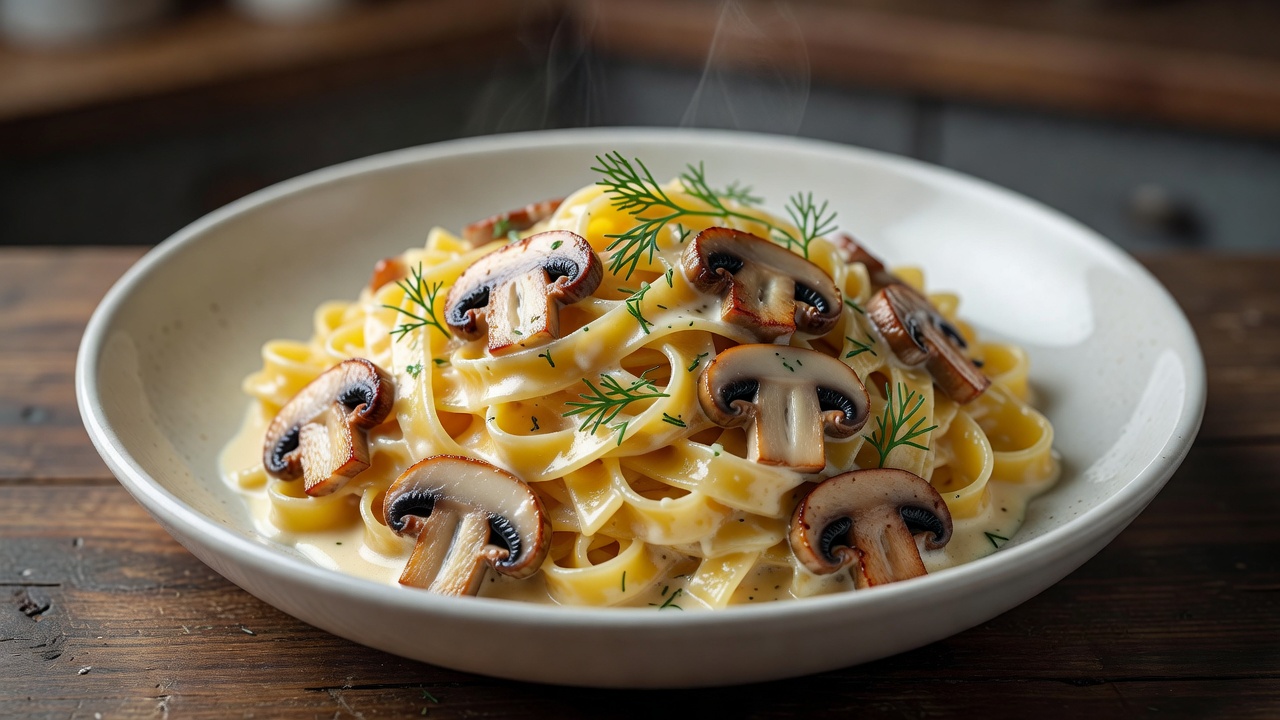
Start with everyday mushrooms
Cultivated chestnut or white button mushrooms are a reliable starting point. Oyster mushrooms also work, although their torn edges and thin caps brown differently. Use one variety while learning the method. Expensive wild mushrooms are not necessary, and this guide is not an identification resource for foraging.
For two portions, gather 160–200 g dried noodles, 300 g mushrooms, one small shallot, one tablespoon oil, 100 ml cream, a small handful of dill and a lemon. Have salt, black pepper and a mug ready for cooking water. A little butter is optional; add it later for flavour rather than exposing it to the hottest stage of cooking.
Trim dry ends, remove visible debris and slice the mushrooms evenly. A quick rinse is fine when needed; dry them thoroughly afterwards. Avoid leaving wet mushrooms piled up while the pan heats. Finely chop the shallot and keep it separate, because it can burn before the mushrooms have developed colour.
Make room for browning
Heat a wide frying pan over medium-high heat, then add the oil. Add enough mushrooms to form a loose layer. If the pan looks crowded, cook in two batches. A crowded pan traps moisture, making the mushrooms steam; more heat alone will not always solve that problem.
Let the first side sit briefly before moving the slices. They may release liquid, shrink and look pale before they brown. Wait for visible moisture to evaporate, then turn or stir. Reduce the heat if the pan begins smoking or the edges blacken. You want savoury colour, not scorched bitterness.
Salt lightly during cooking or after the first colour appears; either approach can work. Pan space, heat control and patience matter more than a rigid rule about the exact second salt is added. Transfer a finished batch to a plate while you cook the next, then return everything to the pan.
Read the pan, not just the clock
Build a sauce without burying the flavour
Lower the heat to medium. Add the shallot, plus a little more oil if the pan is dry, and cook until softened. Add optional butter now. Pour in a small splash of water and scrape up the browned residue with a wooden spoon. If the residue is burnt rather than brown, do not dissolve it into your dinner.
Add the cream and bring it to a gentle simmer. Meanwhile, cook the noodles according to their packet instructions. Before draining, reserve a mugful of cooking water. Add the noodles to the mushroom pan and toss gently, introducing water one tablespoon at a time until the sauce coats the strands.
Stop while the sauce looks slightly looser than you want on the plate. Starch thickens as the noodles stand, and a sauce that looks perfect in a dry pan can become sticky by the time you sit down. If this happens, add a little warm water and move the noodles gently to restore the texture.
Choose the finish and useful swaps
Take the pan off the heat before adding chopped dill and a little lemon juice. Taste, then adjust salt and pepper. Lemon zest offers fragrance without much added liquid, but it cannot do the same balancing job as acidity. Add juice gradually so the mushroom flavour remains clear.
For a dairy-free version, use unsweetened oat cooking cream designed for savoury cooking. Products vary: some are thick, some sweet, and some separate under high heat. Check the label and keep the simmer gentle. Olive oil and cooking water can also make a lighter coating, although it will not taste or feel identical to cream.
If using dried porcini for extra depth, soak and cook them according to the package. Strain the soaking liquid carefully to remove grit and add only a little to the sauce. A strong mushroom stock can overpower dill and lemon, so taste before adding the whole quantity. Check stock ingredients for allergens and salt.
Understand the influence and the limits
Mushroom picking and mushroom sauces appear in several Nordic food cultures, including Sweden and Finland. Our noodle bowl borrows the combination of earthy mushrooms, dairy and fresh herbs. It is a modern preparation, not a named regional classic or a substitute for learning local food traditions.
Only use mushrooms from a dependable food supplier or those identified by a qualified local expert. Photographs and general cooking articles cannot establish that a wild mushroom is safe. Cooking does not make every poisonous mushroom edible.
Refrigerate leftovers promptly in a shallow covered container. Keep them cold and follow your local food-safety guidance on storage and reheating. Reheat only the portion you need until thoroughly hot, adding a little water to loosen the sauce. Texture is usually best on the first day; extra cream cannot reverse overcooked noodles.