Choose a noodle that suits the sauce
For two people, start with 160–200 g dried pasta or wheat noodles and adjust for appetite and accompaniments. This is a cooking guide, not a nutritional prescription. Fresh noodles contain more water, so their packet portions will differ. Read the label rather than substituting the same weight automatically.
Tagliatelle works well with a loose mushroom sauce because its broad surface catches small pieces. Short pasta is forgiving with roasted vegetables and flaked salmon. Egg noodles make a soft, comforting bowl, while buckwheat noodles offer an earthier alternative. Soba is a Japanese noodle, not a Nordic tradition; using it here is an intentional cross-cultural adaptation.
Cook according to the packet and taste near the end. If noodles will spend another minute in the sauce, stop when they are just firm enough to finish there. Some rice noodles and gluten-free varieties become fragile with prolonged tossing, so fold them gently or assemble directly in bowls.
Pick one sauce direction
A sauce needs enough liquid to move between the noodles without pooling like soup. For a creamy starting point, use about 100 ml cream or unsweetened oat cooking cream for two, then loosen it with reserved noodle water. Add that water a tablespoon at a time: the starch level varies between pasta brands and cooking methods.
For a lighter finish, warm a little olive oil or butter with a spoonful of mild mustard, then toss with noodles and a splash of cooking water. Keep the pan over moderate heat and move the noodles until the liquid looks glossy. This may need less time than you expect. If the sauce separates, take it off the heat and stir in another small splash of water.
Sauce-ratio starting points
Lemon and vinegar bring brightness, but they do not replace salt. Taste for each separately. Add acidic ingredients gradually, especially around dairy, and avoid aggressively boiling a delicate cream sauce after seasoning.
Give vegetables their own treatment
Vegetables do not all belong in the pan at the same moment. Thinly sliced cabbage can soften quickly in a sauté pan. Carrots, beetroot and celeriac need longer unless sliced very finely. Roast firm roots first so you are not waiting for them while the noodles cool. Cut pieces to a similar size for even cooking.
Add peas near the end, just long enough to heat through. Brown mushrooms before introducing a watery sauce. A handful of tender spinach can wilt in the finished noodles, but tougher greens may need a separate sauté. Two vegetables with contrasting textures usually make a clearer bowl than six ingredients cooked until equally soft.
Choose a substantial topping to suit the meal: cooked salmon, white beans, lentils or tofu all work. These are alternatives, not nutritionally identical swaps. Drain beans well and warm them in the sauce. Cook tofu separately if you want crisp edges. Fold delicate cooked fish in last.
Put the work in a useful order
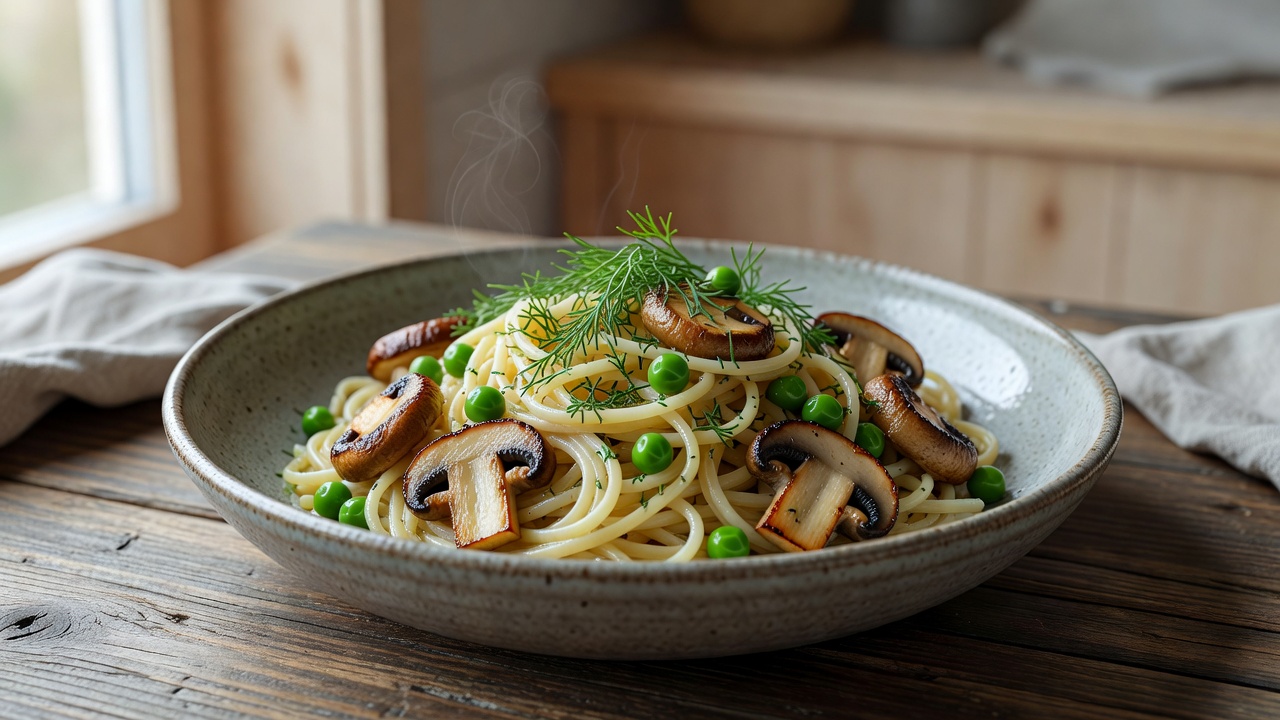
For a mushroom-and-pea version, set out the ingredients before beginning: noodles, sliced mushrooms, peas, cream, lemon and dill. Put a large pan of water on to heat. Brown the mushrooms in a separate wide pan while the water comes up to temperature. If the mushrooms release liquid, let it evaporate before adding cream.
Cook the noodles, adding peas only when their required cooking time fits the final minutes. Reserve a mugful of water before draining. Loosen the mushroom sauce, add the noodles and toss gently. Finish with dill and lemon, then taste for salt. Serve promptly; noodles continue absorbing liquid while they stand.
Timings depend on your hob, pan and noodle choice. A familiar version can be a manageable weeknight meal, but the first attempt may take longer. Wash herbs and cut vegetables in advance if that makes the evening easier. Keep prepared perishable ingredients refrigerated until needed.
Finish with a deliberate contrast
A little crunch makes creamy noodles feel more complete. Toasted rye crumbs offer a bread-like, nutty finish; pumpkin seeds are another option. Check dietary requirements before choosing a topping. Rye contains gluten, and seeds are not suitable for everyone.
Dill, chives, lemon and mild mustard connect these bowls to flavours used in several Nordic kitchens. The assembled noodle dish remains a contemporary interpretation. You do not need to prove authenticity to make a thoughtful dinner: use good technique, name the inspiration honestly and keep the bowl enjoyable.