Use the calendar as a suggestion
There is no single growing season for the whole Nordic region. Coastal Denmark, southern Sweden, inland Finland, northern Norway and Iceland have different climates and supply chains. A vegetable described as seasonal may also come from storage, a greenhouse or an import. Ask where it was grown when that matters to your choice.
For everyday cooking, begin with what looks fresh, fits your budget and can be used without waste. Frozen peas and spinach can be sensible options. Stored carrots and cabbage remain useful long after harvest. Seasonal cooking is a way to make decisions, not a test of purity or a guarantee of lower environmental impact.
| Season | Ingredients to consider | Useful method |
|---|---|---|
| Spring | Asparagus, tender greens, radishes | Quick blanch or sauté |
| Summer | Peas, courgettes, herbs | Brief cooking, fresh finish |
| Autumn | Cultivated mushrooms, beetroot, carrots | Brown or roast |
| Winter | Stored roots, cabbage, leeks | Roast, braise or slice finely |
Give firm roots a head start
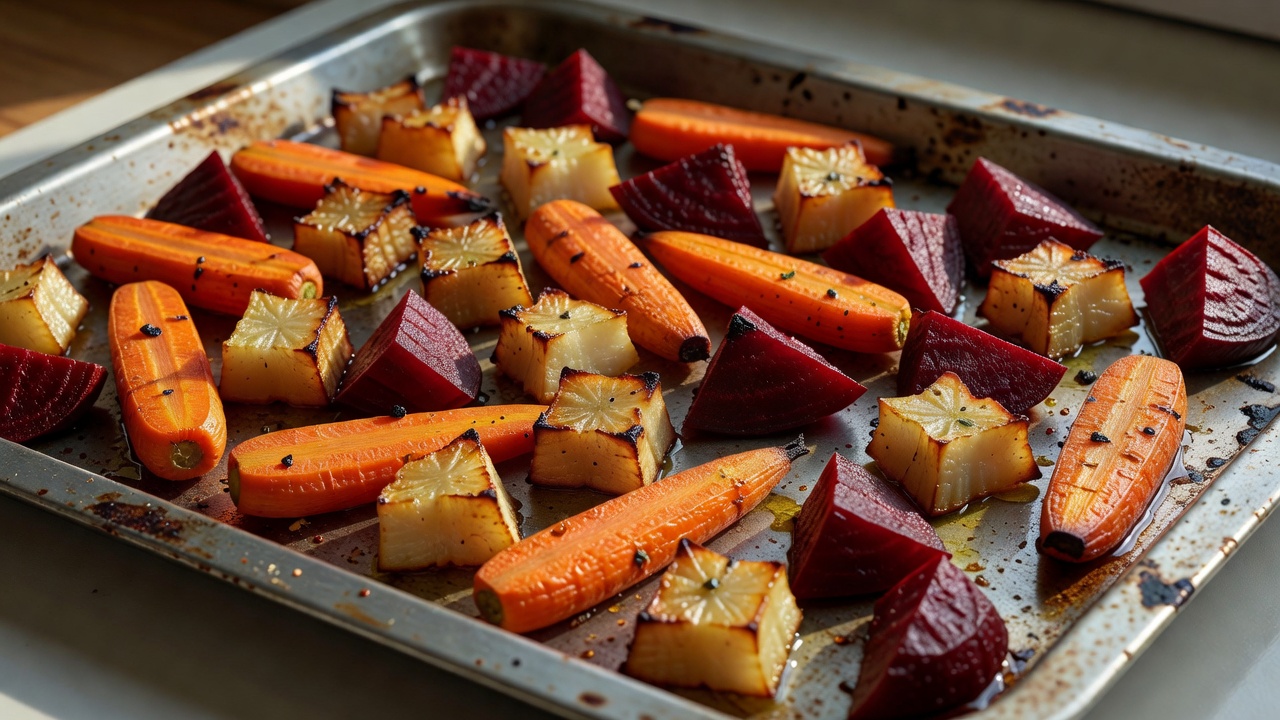
For a two-person noodle bowl, start with around 400 g prepared mixed roots. Carrots and celeriac make a balanced pair; beetroot brings sweetness and a strong colour that will tint pale sauces. Use separate tray sections if you want to keep the colours more distinct.
Heat the oven to 220°C conventional or 200°C fan. Scrub or peel the vegetables as appropriate, remove damaged areas and cut into roughly 2 cm pieces. Toss with enough oil to coat lightly and a little salt. Spread in a single layer on a large tray rather than piling them into a deep dish.
Roast until tender and browned, turning partway through. Start checking around 25 minutes, but allow longer for dense pieces or a crowded tray. A knife should slide into the centre without a hard core. Colour alone is not enough: a dark exterior can hide an undercooked middle.
Begin boiling noodles when the roots are nearly ready, not when they first enter the oven. Toss the cooked noodles with a simple mustard-and-oil coating or a loose cream sauce. Add the roasted roots, then finish with dill, lemon or a small amount of vinegar. Sweet roots usually benefit from that contrast.
Keep tender vegetables lively
Spring and summer ingredients often need the opposite treatment. Trim asparagus and cut it into short pieces; thicker stems take longer than tips. Blanch briefly or sauté until tender with a little bite. Add peas according to their packet instructions rather than letting them simmer through the entire sauce-making process.
Courgette contains plenty of water. Slice it evenly, cook in a reasonably hot pan and avoid crowding it if you want colour. For a softer bowl, you can let it collapse gently instead; just recognise that it will contribute moisture to the sauce. Taste and adjust the liquid after the vegetables are added.
Fresh herbs are generally most fragrant when added at the end. Wash and dry dill, parsley or chives before chopping. If using frozen spinach, cook it according to the package and manage excess liquid so the sauce does not become watery. Convenience ingredients still benefit from a little attention to texture.
Make winter vegetables feel deliberate
Cabbage is useful because the same vegetable can provide several textures. Thin ribbons soften quickly in a pan, while wedges take longer and can develop browned edges. Remove a tough core when needed. Add a splash of water and cover briefly if the cabbage colours before it becomes tender.
Leeks need careful cleaning between their layers, where soil can collect. Slice, rinse thoroughly and drain before cooking. Let them soften slowly for a sweet base, then combine with mushrooms, beans or cooked fish. Celeriac has a firmer structure and a distinctive flavour; peel away the rough exterior and check for soil-filled crevices.
Celery, including celeriac, is a recognised allergen in some labelling systems. Mustard, fish, dairy, wheat and eggs may also appear in these bowls. A seasonal vegetable swap does not make a meal allergy-safe. Read every relevant label and avoid cross-contact when cooking for someone with an allergy.
Borrow the ideas, not a single identity
The New Nordic Kitchen Manifesto, developed in 2004, helped articulate an interest in seasonality, local ingredients and regional food identity. It is a modern movement, not a complete description of how every household in the Nordic countries cooks. Everyday meals also reflect migration, trade, convenience and personal taste.
Rye bread in Denmark, fish preservation in Norway and berry traditions in Finland are distinct references, not interchangeable decorations. Our noodle bowls use selected flavours and practical techniques without claiming to represent an entire country. Pasta with roasted celeriac and dill can be a thoughtful modern adaptation without being described as an ancient dish.
Plan leftovers around ingredients rather than only finished bowls. Extra roasted roots can join tomorrow’s lunch; cooked noodles may soften on reheating. Refrigerate prepared food promptly and follow local storage guidance. Keeping the sauce and toppings separate can make it easier to assemble a fresh-textured meal later.