Identify your salmon before starting
Fresh salmon, hot-smoked salmon and cold-smoked salmon are different ingredients. Fresh fillets need thorough cooking. Hot-smoked salmon is generally cooked during smoking, but follow the product label for storage and preparation. Cold-smoked salmon is not equivalent to a cooked fillet, and it should not be treated as one.
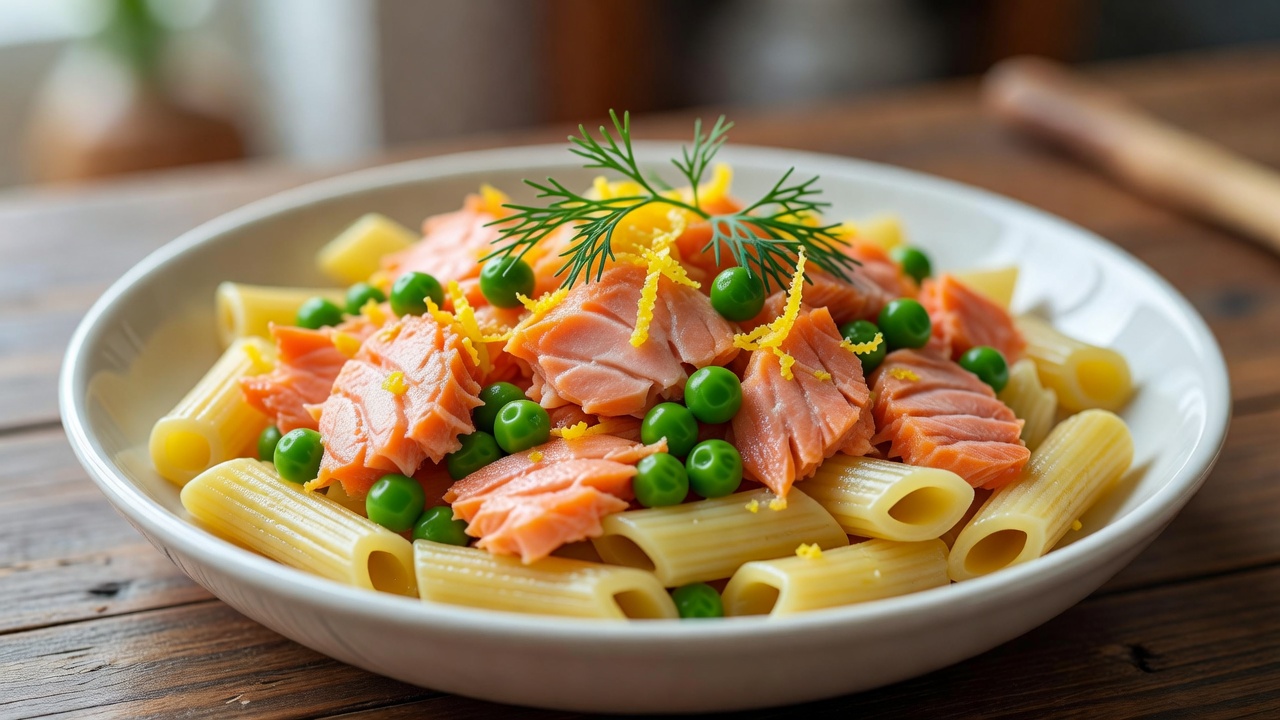
For a fresh-fish bowl for two, a useful starting point is 160–200 g dried pasta, about 250 g boneless salmon, 100 g peas and 100 ml cream. Add a small shallot, lemon, dill and reserved pasta water. Portions are flexible; adjust to appetite and what else you are serving.
If choosing hot-smoked salmon, use its stronger flavour as a guide rather than automatically matching the fresh-fish quantity. Taste a small piece when the label permits it. Some products are distinctly salty or smoky, so the sauce may need less mustard, no additional stock and little added salt.
| Salmon | Preparation | Main adjustment |
|---|---|---|
| Fresh | Cook separately, then flake | Check the centre temperature |
| Cooked leftovers | Reheat thoroughly and gently | Avoid extended simmering |
| Hot-smoked | Follow the product label | Taste before salting |
Cook fresh fish with a clear endpoint
Check the salmon for pin bones. Place it on a lined baking tray, lightly oil and season it, then cook in a preheated oven at 200°C conventional or 180°C fan. Fillet thickness, starting temperature and oven accuracy affect the cooking time, so a fixed number of minutes is not a dependable safety check.
Use a clean food thermometer in the thickest part. The United States Food and Drug Administration lists 63°C as a safe minimum internal temperature for finfish. Follow applicable local food-safety guidance, particularly for people who are pregnant, older, immunocompromised or very young. Do not use colour alone as a guarantee of safety.
While the fish cooks, prepare the pasta and sauce. Once safely cooked, remove skin if desired and break the salmon into large flakes, checking again for bones. Keep it covered briefly while finishing the noodles. Raw-fish utensils and boards should be washed before they touch cooked ingredients.
Make a sauce that supports the fish
Soften the chopped shallot in a little oil over moderate heat. Add the cream and let it warm gently. Cook pasta according to the packet, adding peas at the appropriate point for their cooking instructions. Reserve some cooking water before draining, then combine the pasta and sauce.
Add a spoonful of pasta water and toss until the sauce coats the shapes. Turn down the heat before folding in the cooked salmon. The goal is to distribute it without breaking every flake. Finish with dill, lemon zest and a little lemon juice. Taste before adding salt, especially when using smoked fish.
For a dairy-free variation, use unsweetened oat cooking cream or an olive-oil coating loosened with pasta water. These give different results, so expect to adjust the amount of liquid. A spoonful of mustard can add depth, but check the label for allergens and add it sparingly.
Change one supporting flavour
Peas bring sweetness and need little preparation. Thinly sliced leeks give a gentler, savoury base but must soften before the sauce is added. Spinach can wilt into the pasta near the end. Roasted fennel is another option when you have time to prepare it separately.
Capers add sharpness and salt; drain them and start with a small spoonful. Pickled cucumber offers a different contrast, best served alongside or added in a small amount just before eating. Pouring pickle brine into cream without tasting can quickly unbalance the sauce.
Dill is an easy reference point, not a requirement. Chives or parsley make useful alternatives. Avoid adding every herb and pickle in the fridge: one main aromatic and one bright element are usually enough to keep the salmon recognisable.
Keep tradition and food safety distinct
Salmon, dill and preserved fish feature in several Nordic cuisines, but a creamy salmon pasta bowl is a contemporary combination. Gravlax is cured salmon, not simply another name for hot-smoked fish. Curing, smoking and cooking are separate processes with different safety considerations.
People at higher risk of foodborne illness should consult local public-health advice about refrigerated smoked and cured fish. A quick toss through warm pasta may not heat a product sufficiently. If safety depends on cooking it thoroughly, treat that as a real cooking step, not a garnish instruction.
Refrigerate leftovers promptly and follow local guidance on storage duration. Reheat the portion you intend to eat until thoroughly hot, using a little water to loosen the sauce. Repeated reheating tends to dry the fish and complicates safe handling, so avoid warming the entire batch each time.